--> Langsung ke konten utama

Resep Larutan Nutrisi Hidroponik Buatan Sendiri: Hemat dan Efektif

Resep Larutan Nutrisi Hidroponik Buatan Sendiri: Hemat dan Efektif - Membuat larutan nutrisi hidroponik sendiri dapat menjadi pilihan yang menarik bagi para hidroponik enthusiast. Selain lebih hemat, Anda juga dapat menyesuaikan komposisi nutrisi sesuai dengan kebutuhan tanaman. Namun, sebelum memulai, penting untuk memahami bahwa pembuatan larutan nutrisi memerlukan ketelitian dan perhitungan yang akurat.
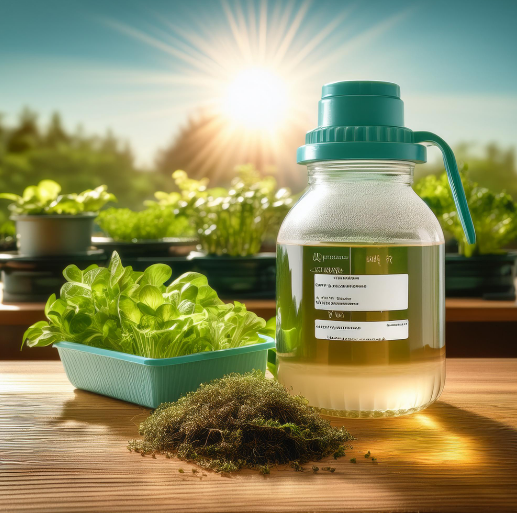
Resep Larutan Nutrisi Hidroponik Buatan Sendiri: Hemat dan Efektif

Mengapa Membuat Larutan Nutrisi Sendiri?

  • Lebih hemat: Membuat larutan nutrisi sendiri bisa menghemat biaya dibandingkan membeli larutan nutrisi siap pakai.
  • Fleksibel: Anda dapat menyesuaikan komposisi nutrisi sesuai dengan fase pertumbuhan tanaman.
  • Lebih memahami nutrisi tanaman: Dengan membuat sendiri, Anda akan lebih memahami kebutuhan nutrisi tanaman.

Nutrisi Esensial untuk Tanaman

Tanaman membutuhkan berbagai nutrisi untuk tumbuh dengan baik. Nutrisi makro yang dibutuhkan dalam jumlah besar adalah nitrogen (N), fosfor (P), dan kalium (K). Selain itu, tanaman juga membutuhkan nutrisi mikro seperti zat besi (Fe), mangan (Mn), boron (B), tembaga (Cu), seng (Zn), molibdenum (Mo), dan klorin (Cl).

Bahan-bahan yang Dibutuhkan

  • Pupuk dasar: Urea (sumber nitrogen), TSP (Triple Super Phosphate, sumber fosfor), dan KCL (Kalium Klorida).
  • Pupuk mikro: Tersedia dalam bentuk chelate atau organik.
  • Air bersih: Gunakan air yang bebas dari klorin dan zat-zat berbahaya lainnya.
  • pH meter: Untuk mengukur tingkat keasaman larutan.


Langkah-langkah Membuat Larutan Nutrisi

1. Hitung kebutuhan nutrisi: Tentukan jenis tanaman yang akan Anda budidaya dan cari tahu kebutuhan nutrisi spesifiknya.

2. Larutkan pupuk: Larutkan pupuk dasar dan mikro secara terpisah dalam air. Aduk hingga larutan homogen.

3. Campurkan larutan: Campurkan larutan pupuk dasar dan mikro secara perlahan sambil terus diaduk.

4. Ukur pH: Sesuaikan pH larutan sesuai dengan kebutuhan tanaman. pH yang ideal untuk sebagian besar tanaman adalah 5.5-6.5.

5. Simpan larutan: Simpan larutan nutrisi dalam wadah yang bersih dan tertutup rapat.

Resep Dasar Larutan Nutrisi (Contoh)

  • A-Solution: Urea, TSP
  • B-Solution: KCL, pupuk mikro

Peringatan:

  • Ketelitian: Kesalahan dalam perhitungan dan pencampuran dapat menyebabkan kerusakan pada tanaman.
  • Keselamatan: Gunakan sarung tangan dan masker saat membuat larutan nutrisi.
  • Uji coba: Lakukan uji coba pada skala kecil sebelum menerapkan pada tanaman utama.

Tips Tambahan

  • Gunakan air RO: Air Reverse Osmosis (RO) lebih murni dan tidak mengandung zat-zat yang dapat mengganggu pertumbuhan tanaman.
  • Pantau pH secara berkala: pH larutan nutrisi dapat berubah seiring waktu, sehingga perlu dilakukan penyesuaian secara berkala.
  • Gunakan alat bantu: Anda dapat menggunakan kalkulator nutrisi untuk mempermudah perhitungan.

Kesimpulan

Membuat larutan nutrisi sendiri dapat menjadi pengalaman yang menyenangkan dan bermanfaat. Namun, perlu diingat bahwa pembuatan larutan nutrisi memerlukan ketelitian dan pengetahuan yang cukup. Jika Anda masih ragu, sebaiknya konsultasikan dengan ahli hidroponik.

Komentar

Postingan populer dari blog ini

Precision Livestock Farming: How Smart Technology Is Revolutionizing Animal Agriculture

Precision livestock farming improves animal health, increases productivity, reduces costs, and supports sustainable agriculture through smart monitoring and data-driven livestock management. Livestock farming is an essential component of global agriculture, providing meat, milk, eggs, and other animal products that support food security and rural economies. However, modern animal agriculture faces significant challenges, including disease outbreaks, rising feed costs, environmental concerns, and increasing demand for sustainable production. Precision livestock farming offers a transformative solution. By integrating smart technology, data analytics, and automated monitoring systems, farmers can improve animal health, optimize productivity, and enhance farm profitability. This data-driven approach represents the future of sustainable livestock management. What Is Precision Livestock Farming? Precision livestock farming (PLF) refers to the use of advanced technologies to monitor, ana...

Carbon Farming and Soil Carbon Sequestration: A Sustainable Path to Climate-Smart Agriculture

Carbon farming increases soil carbon sequestration, improves soil health, supports climate-smart agriculture, and creates new income opportunities for farmers worldwide. Agriculture plays a critical role in addressing climate change. While farming activities can contribute to greenhouse gas emissions, they also offer significant potential to capture and store carbon in the soil. Carbon farming has emerged as a promising approach that benefits both the environment and agricultural productivity. Carbon farming focuses on practices that increase soil carbon sequestration while maintaining profitable crop and livestock production. By improving soil health and ecosystem function, carbon farming supports climate-smart agriculture and long-term farm sustainability. What Is Carbon Farming? Carbon farming refers to agricultural practices designed to remove carbon dioxide from the atmosphere and store it in soil and plant biomass. These practices enhance natural carbon cycles while improving...

Smart Greenhouse Technology: Revolutionizing Controlled Environment Agriculture

Smart greenhouse technology enhances controlled environment agriculture through automation, climate control systems, hydroponics, and precision farming tools to improve crop productivity and sustainability. Modern agriculture faces increasing pressure from climate change, land scarcity, and rising food demand. Traditional open-field farming is highly dependent on weather conditions, making crop production vulnerable to droughts, floods, and temperature extremes. To overcome these challenges, agricultural innovation has turned toward controlled environment agriculture (CEA), particularly smart greenhouse technology. Smart greenhouses combine automation, climate control systems, sensor-based monitoring, and data analytics to create optimal growing conditions for crops. By precisely managing temperature, humidity, light, irrigation, and nutrients, farmers can maximize productivity while minimizing environmental impact. This technology represents a transformative advancement in sustaina...

Precision Irrigation Systems: Advancing Water Efficiency in Modern Agriculture

Precision irrigation systems improve water efficiency, crop productivity, and sustainable agriculture through smart irrigation technology, soil moisture monitoring, and data-driven farm management. Water is one of the most critical resources in agricultural production. However, increasing water scarcity, climate change, and growing food demand are placing significant pressure on global farming systems. Efficient water management has become essential for sustainable agriculture. One of the most promising innovations in agricultural science is precision irrigation systems. Precision irrigation uses advanced technology to deliver the right amount of water at the right time and in the right place. By integrating smart irrigation technology, soil moisture sensors, and data analytics, farmers can optimize crop growth while conserving water resources. This modern approach represents a key pillar of climate-resilient and sustainable farming practices. What Is Precision Irrigation? Precisi...

AI in Crop Monitoring: How Artificial Intelligence Is Transforming Modern Agriculture

AI in crop monitoring improves crop health analysis, increases yields, reduces input costs, and supports precision agriculture through data-driven farming solutions. Agriculture is undergoing a digital transformation, and artificial intelligence (AI) is at the center of this revolution. As global food demand rises and environmental pressures intensify, farmers need smarter tools to improve productivity and sustainability. AI in crop monitoring offers a powerful solution by combining data analytics, machine learning, and real-time field insights. By leveraging artificial intelligence in agriculture, farmers can detect crop stress early, optimize input use, and make informed management decisions. AI-powered crop monitoring is quickly becoming an essential component of precision agriculture and sustainable farming systems. What Is AI in Crop Monitoring? AI in crop monitoring refers to the use of artificial intelligence technologies to analyze crop conditions, predict growth patterns, ...

Organic Farming Systems: Principles, Benefits, and Sustainable Agricultural Practices

Organic farming systems promote sustainable agriculture through natural soil fertility management, biological pest control, crop rotation, and environmentally friendly practices that enhance long-term productivity. As global awareness of environmental sustainability grows, organic farming systems have gained significant attention in modern agricultural science. Consumers increasingly demand food produced without synthetic chemicals, while farmers seek long-term soil health and ecological balance. Organic agriculture represents a holistic farming approach that prioritizes natural processes, biodiversity, and sustainable resource management. Organic farming is not simply the absence of synthetic fertilizers and pesticides. It is a comprehensive agricultural system built on ecological principles, soil fertility management, and biological pest control. By integrating sustainable farming practices, organic agriculture supports environmental conservation, food safety, and rural development...

Agricultural Biotechnology and Genetic Engineering: Transforming Modern Farming

Agricultural biotechnology and genetic engineering enhance crop productivity, improve pest resistance, and support sustainable agriculture through advanced breeding technologies and precision genetic modification. Agriculture has evolved dramatically over the past century, driven by scientific innovation and technological advancement. As global food demand increases and climate change threatens crop production, agricultural biotechnology has emerged as a powerful tool in modern agricultural science. By applying genetic engineering and molecular biology techniques, scientists can develop crops that are more resilient, productive, and environmentally sustainable. Agricultural biotechnology combines traditional plant breeding with advanced genetic modification technologies to improve crop traits. From pest resistance to drought tolerance, biotechnology plays a critical role in strengthening global food security while supporting sustainable farming systems. What Is Agricultural Biotech...

Regenerative Agriculture Practices: Restoring Soil Health While Increasing Farm Profitability

Regenerative agriculture practices restore soil health, improve crop yields, enhance biodiversity, and increase long-term farm profitability through sustainable farming methods. Modern agriculture has achieved remarkable productivity, but intensive farming practices have also contributed to soil degradation, biodiversity loss, and declining ecosystem resilience. As farmers search for solutions that balance productivity with environmental responsibility, regenerative agriculture has emerged as a powerful approach. Regenerative agriculture focuses on restoring natural systems while maintaining profitable farm operations. By improving soil health, enhancing biodiversity, and optimizing resource use, regenerative farming practices support long-term agricultural sustainability and economic stability. What Is Regenerative Agriculture? Regenerative agriculture is a holistic farming approach designed to rebuild soil organic matter, improve ecosystem function, and increase farm resilience. ...